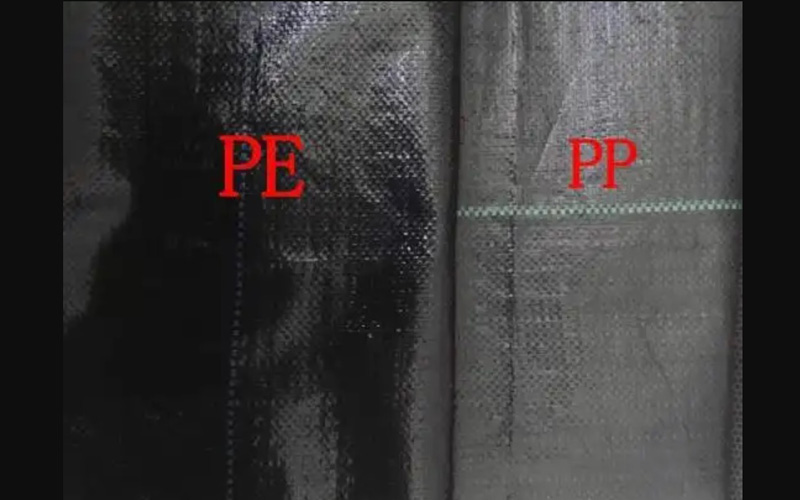
Weed control fabric commonly used in the market is made of two different materials: PP and PE. Customers often ask about the differences between them and how to distinguish between these two materials. Let's take a look at the differences between PP and PE, and how to differentiate them.
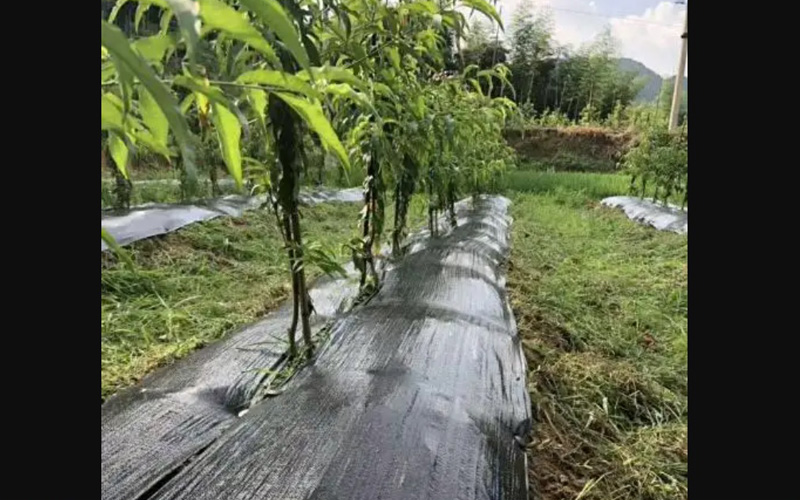
Differences between PP and PE weed control fabric:
1. Material difference: PP is short for polypropylene; PE is short for polyethylene.
2. Color difference: PP weed control fabric is dull and lacks luster; PE weed control fabric is black and shiny.
3. Weight difference: PP weed control fabric generally weighs 90 grams per square meter; PE weed control fabric generally weighs 75 grams per square meter. Higher weights of both can be customized.
4. Water permeability and breathability difference: PP weed control fabric is thicker, therefore its water permeability and breathability are worse than PE weed control fabric.
5. Feel difference: PP weed control fabric has a rough texture and feels stiff; PE weed control fabric is soft and feels smooth. 6. Anti-aging UV: The anti-aging UV additive in PP material weed control fabric is in powder form; the anti-aging UV additive in PE material weed control fabric is in granular form.
7. Service life difference: PE weed control fabric can be used for 6-7 years indoors (e.g., in greenhouses), 4-5 years outdoors, and 3-4 years in areas with high UV radiation; PP weed control fabric can be used for 2-3 years indoors, 1-2 years outdoors, and about 1 year in areas with high UV radiation.
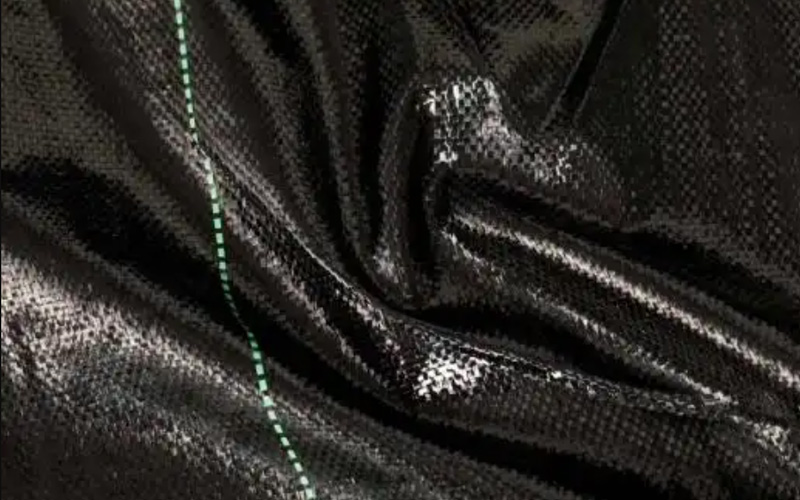
Similarities between PE and PP weed control fabrics:
1. Weed control: Both materials can remove weeds and prevent weed growth.
2. Biodegradability: Neither material is completely biodegradable.
3. Shrinkage: Both materials have shrinkage; it is recommended to lay the weed control fabric with some looseness.
Now that we know the differences and similarities between PP and PE, let's understand how to distinguish between PP and PE weed control fabrics:
1. Visual Inspection: Under normal circumstances, PE weed control fabric has a slightly higher gloss, finer texture, and is lighter and thinner than PP weed control fabric. PP weed control fabric made from a mixture of new and recycled materials has a very similar gloss to PE weed control fabric, making it difficult to distinguish with the naked eye.
2. Touch Inspection: Under normal circumstances, PE weed control fabric is slightly softer and smoother than PP weed control fabric.
3. Burning Test: PE and PP are difficult to distinguish. Both can burn with a blue flame. PE produces very faint white smoke when burning and melts and drips as it burns. PP produces slightly more smoke than PE, but does not melt and drip.
4. Odor: When PP and PE weed control fabrics are lit, PE has a candle-like smell, while PP has a pungent odor. Finally, it's worth mentioning that visual and tactile inspection has significant limitations. This is because the color, gloss, and flexibility of each batch of raw material particles will vary, so it's inevitable that there will be differences in color, gloss, and flexibility between different batches.